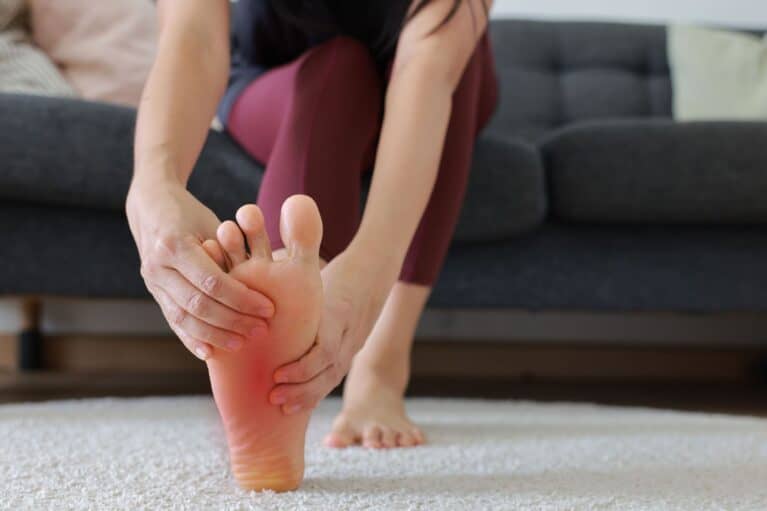

Foot pain when walking can have several possible causes.
It may be linked to how your foot is loading, your footwear, a recent change in activity, irritation in the soft tissues, pressure through the joints or a skin or nail problem.
Sometimes the painful area gives a clear clue. Other times, the pain is part of a wider movement or loading pattern. That is why assessment can be helpful if symptoms persist, keep returning or start affecting your daily activity.
You do not need to know exactly what is wrong before booking. A podiatrist can assess your symptoms and help explain what may be contributing to the problem.
Common reasons your foot may hurt when walking
Walking places repeated load through your feet, ankles and lower limbs. If one area is irritated, overloaded or under pressure, pain can appear during or after movement.
Common reasons for foot pain when walking include:
- Heel pain
- Plantar fasciitis
- Forefoot pain
- Morton’s neuroma (Read our blog: Morton’s Neuroma: Why Your Forefoot Burns)
- Achilles pain
- Flat feet or arch pain
- Bunions
- Verrucas
- Ingrown toenails
- Footwear pressure
- Changes in activity
- Previous injury
- Uneven loading or altered gait
Pain is not always caused by the painful area alone. Foot posture, joint movement, muscle strength, flexibility, lower-limb alignment, footwear and loading patterns may all contribute to symptoms .
Heel pain when walking
Heel pain is one of the most common reasons people seek podiatry advice.
You may feel pain under the heel, around the back of the heel or through the arch. It might be worse first thing in the morning, after sitting or after longer periods of standing or walking.
Heel pain can have several possible causes. It may relate to plantar fasciitis, Achilles tendon irritation, bursitis, overload, footwear, injury or changes in activity .
If your heel pain keeps returning, assessment can help clarify whether the pain may be linked to the plantar fascia, Achilles tendon, soft tissue irritation, foot loading or another cause.
Pain under the arch of the foot
Arch pain when walking may be linked to the way the foot is loading.
Some people notice aching through the arch after standing for a long time. Others feel sharp pain under the heel or arch when they first get up.
Plantar fasciitis is one possible cause. This involves irritation of the tissue that runs under the heel and arch. It commonly causes pain under the heel, especially with first steps after rest, and may be linked to activity changes, footwear, calf tightness, foot posture or loading patterns.
If your symptoms may be linked to plantar fasciitis, read our guide to plantar fasciitis exercises and stretches that may help.
Flat feet can also contribute to arch discomfort in some people. Flat feet are often harmless, but pain, tiredness or inside ankle discomfort may benefit from assessment .
Pain in the ball of the foot
Pain in the ball of the foot can feel sharp, burning, aching or bruised.
You may notice it more in tight shoes, after longer walks or when pushing off through the toes. Some people describe a “stone in the shoe” feeling.
Morton’s neuroma is one possible cause of forefoot pain. It is commonly associated with pain in the ball of the foot near the toes, with symptoms that may include sharp, burning or shooting pain, tingling, numbness or the feeling of standing on a small stone .
Forefoot pain may also be linked to footwear pressure, toe joint irritation, bunions, foot shape or repeated loading.
Achilles or back-of-heel pain
Pain at the back of the heel or just above it may be linked to the Achilles tendon.
The Achilles tendon connects the calf muscles to the heel bone. It helps you push off when walking, running or climbing stairs.
Achilles pain or stiffness often relates to how the tendon is being loaded. It may be more noticeable first thing in the morning, after activity or when walking uphill.
Contributing factors can include changes in activity, calf tightness, footwear, training load, foot posture or lower-limb mechanics.
Foot pain caused by footwear
Shoes can make a noticeable difference to foot comfort.
Footwear may contribute to pain if it is:
- Too narrow
- Too tight across the forefoot
- Worn down unevenly
- Unsuitable for your activity
- Too flexible for your current symptoms
- Lacking cushioning where you need it
- Creating rubbing or pressure
Supportive, comfortable footwear may help in the short term. However, if pain persists, footwear may only be one part of the picture.
Stuart can review your shoes as part of an assessment and explain whether footwear may be contributing to your symptoms.
Why foot pain can keep coming back
Recurring foot pain often means there is a contributing factor that has not yet been addressed.
For example, pain may settle when you rest, then return when you walk further, change shoes or restart exercise. This pattern can be frustrating, especially when there is no obvious injury.
Pain that keeps coming back may be linked to:
- Walking pattern
- Foot posture
- Uneven loading
- Muscle strength
- Joint movement
- Calf flexibility
- Training load
- Work demands
- Footwear
- Previous injury
Gait analysis can help assess the way you walk or run. It may identify movement patterns, loading issues or asymmetries that could be contributing to pain, recurring injury or reduced comfort when moving .
What you can try safely
If your foot pain is mild and improving, simple changes may help.
You may find it helpful to:
- Avoid pushing through worsening pain
- Reduce or modify painful activity for a short time
- Wear comfortable, supportive footwear
- Avoid sudden increases in walking or running
- Keep a note of when pain appears
- Avoid shoes that clearly increase symptoms
- Bring your everyday shoes to an appointment if symptoms persist
Try not to ignore pain that is getting worse or changing the way you walk.
Self-care can be useful, but it should not replace assessment if symptoms are persistent, recurring or affecting daily life.
When should you see a podiatrist?
It is sensible to book an assessment if foot pain is affecting walking, running, work, sport or everyday activity.
You should also consider seeing a podiatrist if:
- Pain keeps coming back
- Symptoms are getting worse
- Pain has not improved with sensible self-care
- You are changing the way you walk
- You feel unstable or unsure on your feet
- You have tingling, numbness or altered sensation
- You have diabetes and develop foot pain
- You are worried about a skin, nail or shape change
- You are unsure whether orthoses or footwear changes may help
Assessment can help clarify what may be contributing to your symptoms and guide the most suitable next steps.
Seek urgent medical help if you have severe pain after an injury, cannot walk, notice sudden deformity, have spreading redness, fever, pus, a deep wound or signs of infection. This wording is recommended for clinical safety in Evolution Podiatry content .
How Stuart can help
Stuart Hodder can assess your foot pain in the context of how you move, load and use your feet day to day.
Your appointment may include:
- A discussion about your symptoms
- Review of your activity, work and footwear
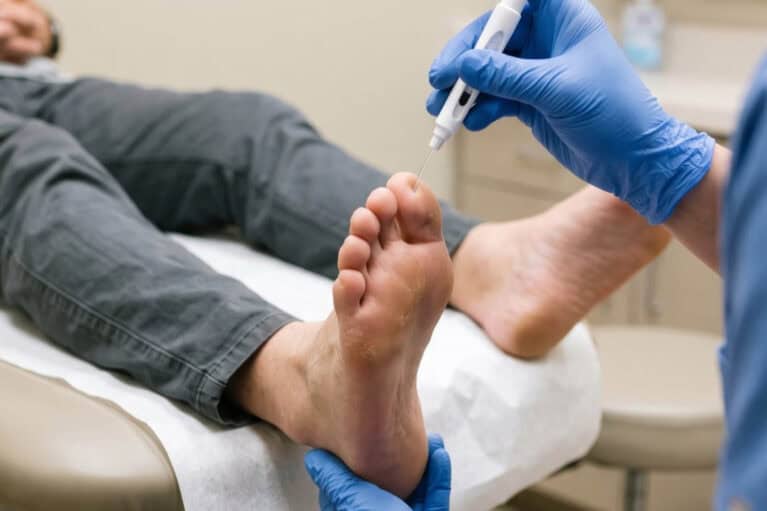
- Foot and ankle assessment
- Lower-limb movement checks
- Foot posture assessment
- Gait analysis where appropriate
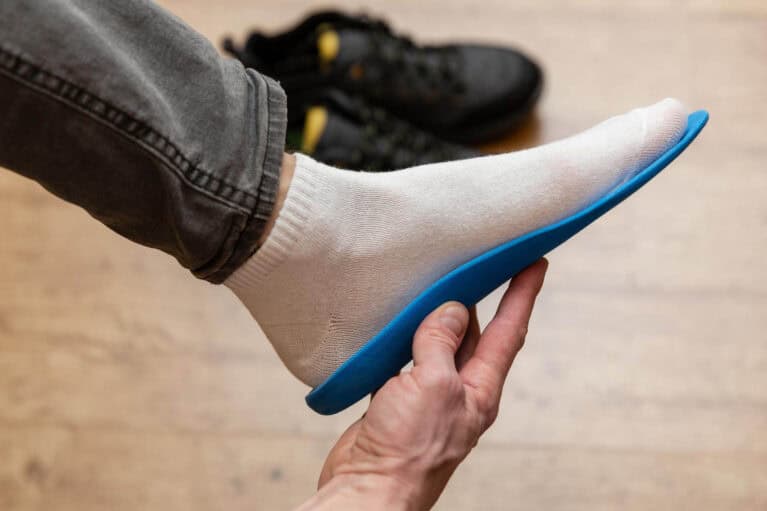
- Orthoses discussion if suitable
- Clear explanation of the findings
- Practical next steps
A biomechanical assessment helps Stuart understand how your feet, legs and body are working together. If your foot is loading unevenly, your calf is tight, your ankle is restricted or your walking pattern has changed, this can place extra strain on other areas .
The aim is to help you understand what may be driving your pain, not simply treat the painful area in isolation.
FAQs
- Is foot pain when walking always serious?
No. Some foot pain settles with sensible self-care, footwear changes or reduced activity. Assessment is recommended if pain persists, keeps returning, worsens or affects how you walk.
- Why does my heel hurt when I walk?
Heel pain can have several causes, including plantar fasciitis, Achilles irritation, bursitis, overload, footwear, injury or changes in activity.
- Why does the ball of my foot hurt when walking?
Ball-of-foot pain may be linked to pressure, footwear, forefoot loading, toe joint irritation or nerve irritation such as Morton’s neuroma.
- Can shoes cause foot pain?
Yes, footwear can contribute to foot pain, especially if shoes are tight, worn, unsupportive or unsuitable for your activity. Stuart can review your footwear during assessment.
- Will I need gait analysis?
Not always. Gait analysis may be useful if pain appears during walking or running, if symptoms keep returning or if movement patterns may be relevant.
- Will I need orthoses?
Not everyone needs orthoses. Stuart will only discuss them if your assessment suggests they may support foot function, comfort or loading.
- Should I keep walking if my foot hurts?
If walking is making pain worse, it may be sensible to reduce or modify activity until you have been assessed. Avoid pushing through worsening pain.
Book a podiatry assessment for foot pain
If foot pain is affecting how you walk, work, exercise or move day to day, an assessment can help you understand what may be contributing.
Stuart will assess your symptoms, explain the findings clearly and guide you through the most suitable next steps.