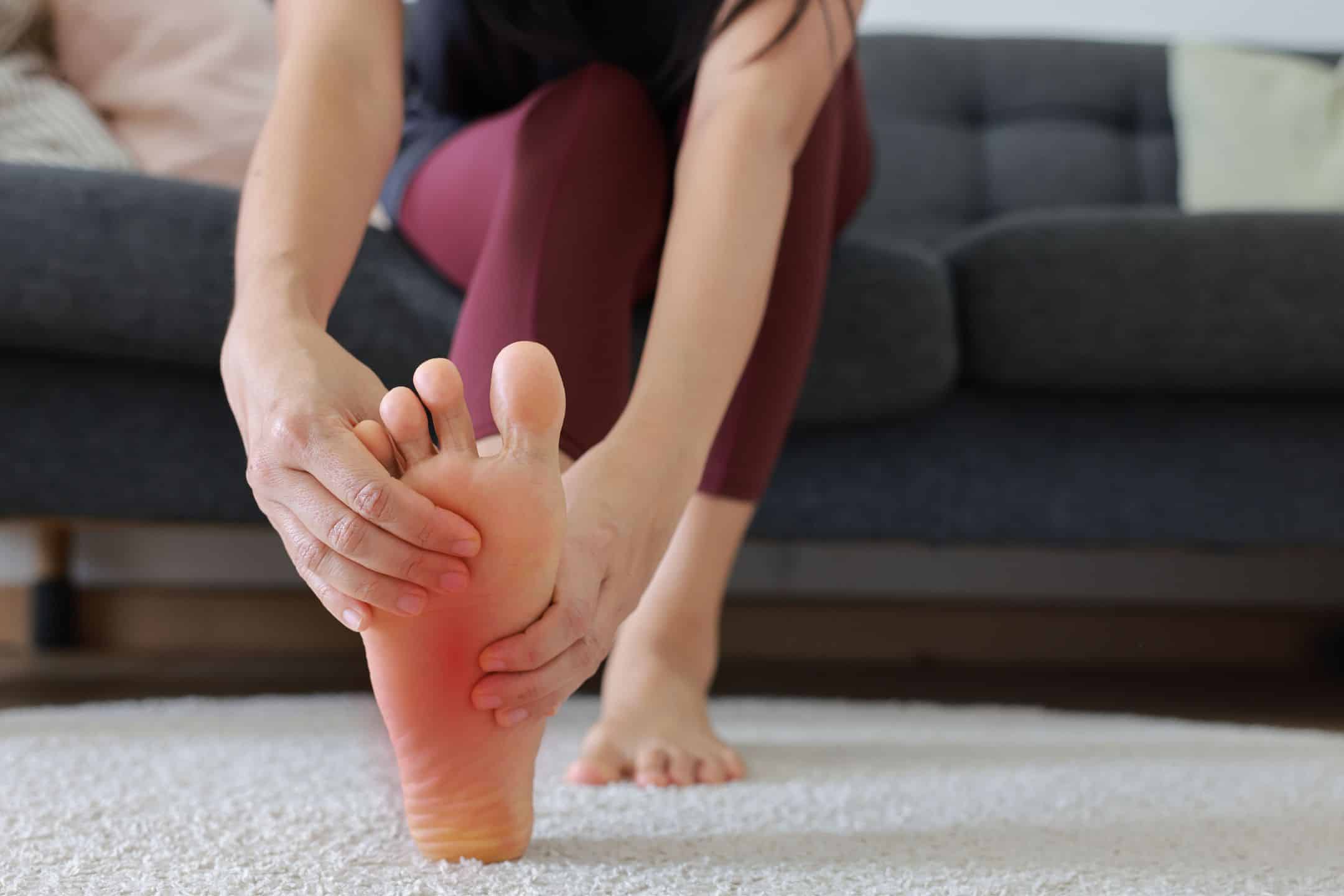

Plantar fasciitis exercises can be a useful part of managing pain under the heel or through the arch of the foot. The most helpful routines usually combine gentle stretching with gradual strengthening, rather than relying on one exercise alone.
Plantar fasciitis is irritation or strain affecting the plantar fascia – the strong band of tissue running from your heel towards your toes. It often causes pain with the first few steps in the morning or after rest, then may become more noticeable again after longer periods of standing, walking or running. For a fuller explanation of symptoms, contributing factors and treatment options, see our guide to plantar fasciitis.
This article provides general guidance, not a diagnosis or personalised rehabilitation plan. If an exercise causes sharp pain, a clear increase in symptoms or you are unsure whether it is appropriate for you, stop and seek advice.
Why plantar fasciitis exercises may help
Heel pain is not always simply a problem in one small spot under the foot. It can be influenced by how your foot and lower limb are loading, calf flexibility, footwear, recent changes in activity and the way you walk, run or stand.
Exercises for plantar fasciitis often aim to:
- Gently improve flexibility through the plantar fascia and calf
- Build strength in the foot and ankle
- Gradually improve the tissues’ tolerance for walking, running and standing
- Reduce the impact of sudden changes in activity
Clinical guidance supports using plantar fascia-specific stretches, calf stretches and strengthening exercises for the foot and ankle as part of a wider approach to plantar heel pain.
The key is dosage. Doing too much, too soon can aggravate a sensitive heel. Start gently, stay consistent and progress only when the exercises feel manageable.
6 plantar fasciitis exercises and stretches to try
These plantar fasciitis stretches and exercises are commonly used as part of a gradual self-care plan. They should feel like gentle effort or stretching, not sharp or escalating pain.
1. Plantar fascia stretch
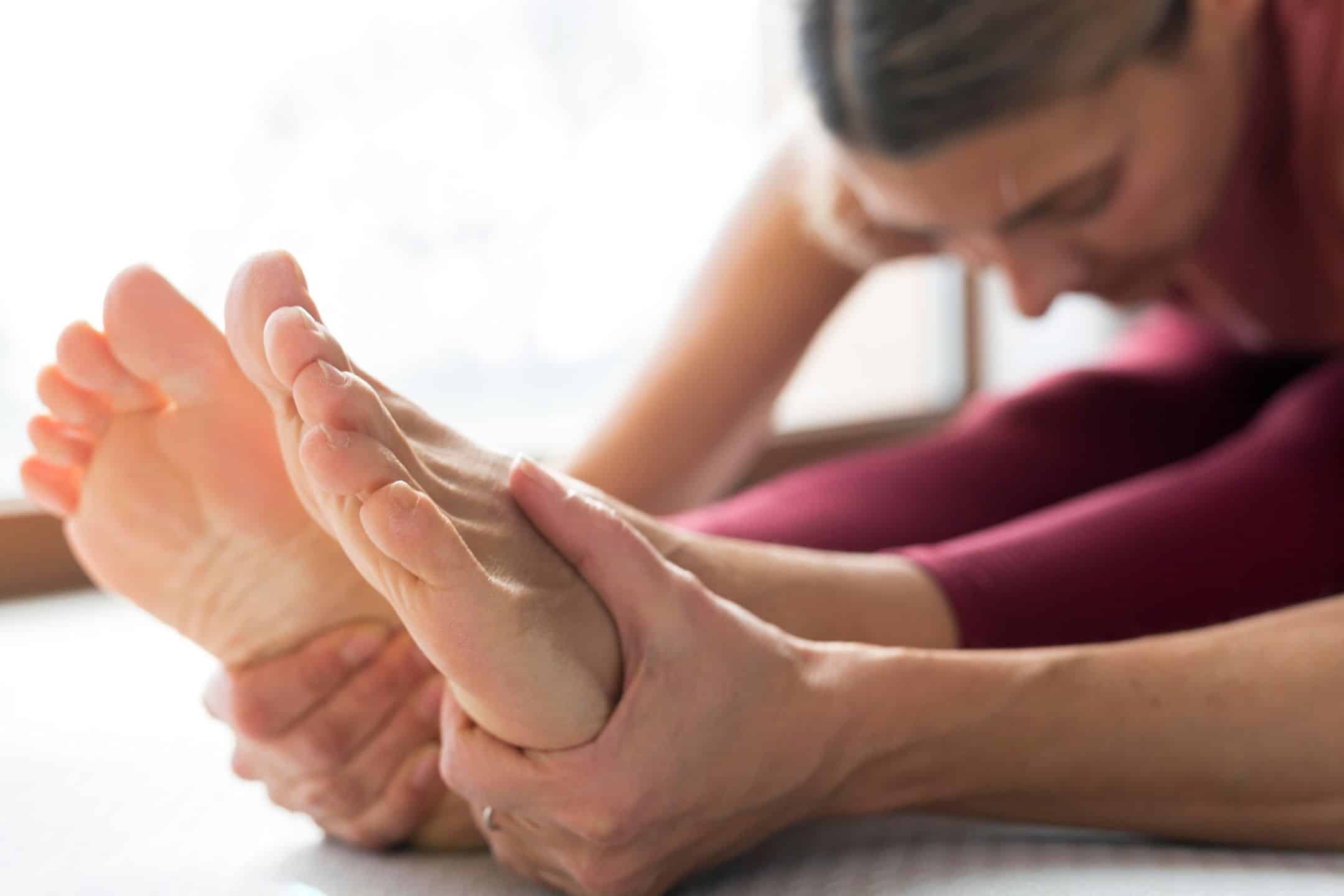
This is a targeted stretch for the tissue under your foot. It can be particularly useful before taking your first steps in the morning.
- Sit with the painful foot resting over your opposite knee.
- Hold your heel with one hand.
- With the other hand, gently pull your toes back towards your shin.
- You should feel a stretch through the arch of the foot.
- Hold for 10 seconds, then relax.
Try: 10 repetitions, especially before getting out of bed and after sitting for a prolonged period.
You can gently massage the arch with your thumb while holding the stretch if this feels comfortable. Plantar fascia-specific stretching has been shown to support improvements in pain and function for people with persistent plantar heel pain.
2. Straight-knee calf stretch
Tightness through the calf can increase the pull through the heel and plantar fascia. This plantar fasciitis calf stretch targets the larger calf muscle.
- Stand facing a wall with both hands supported against it.
- Step the affected side back.
- Keep the back knee straight and the heel on the floor.
- Bend the front knee slightly and lean forwards until you feel a stretch in the back calf.
- Keep your toes pointing forwards rather than allowing the foot to turn out.
Try: Hold for 20 to 30 seconds. Repeat 3 times, once or twice daily.
Avoid forcing your heel down or bouncing into the stretch. A steady, comfortable stretch is enough.
3. Bent-knee calf stretch
The calf has more than one muscle. Bending the back knee slightly changes the area being stretched and may be helpful if you feel tightness lower down towards the Achilles tendon.
- Stand facing a wall, with the affected foot behind you.
- Keep both heels on the floor.
- Bend both knees while keeping your back heel down.
- Lean forwards slowly until you feel a stretch in the lower part of the calf.
- Hold, then return to the start.
Try: Hold for 20 to 30 seconds. Repeat 3 times, once or twice daily.
Both straight-knee and bent-knee calf stretches are commonly included in programmes for plantar heel pain.
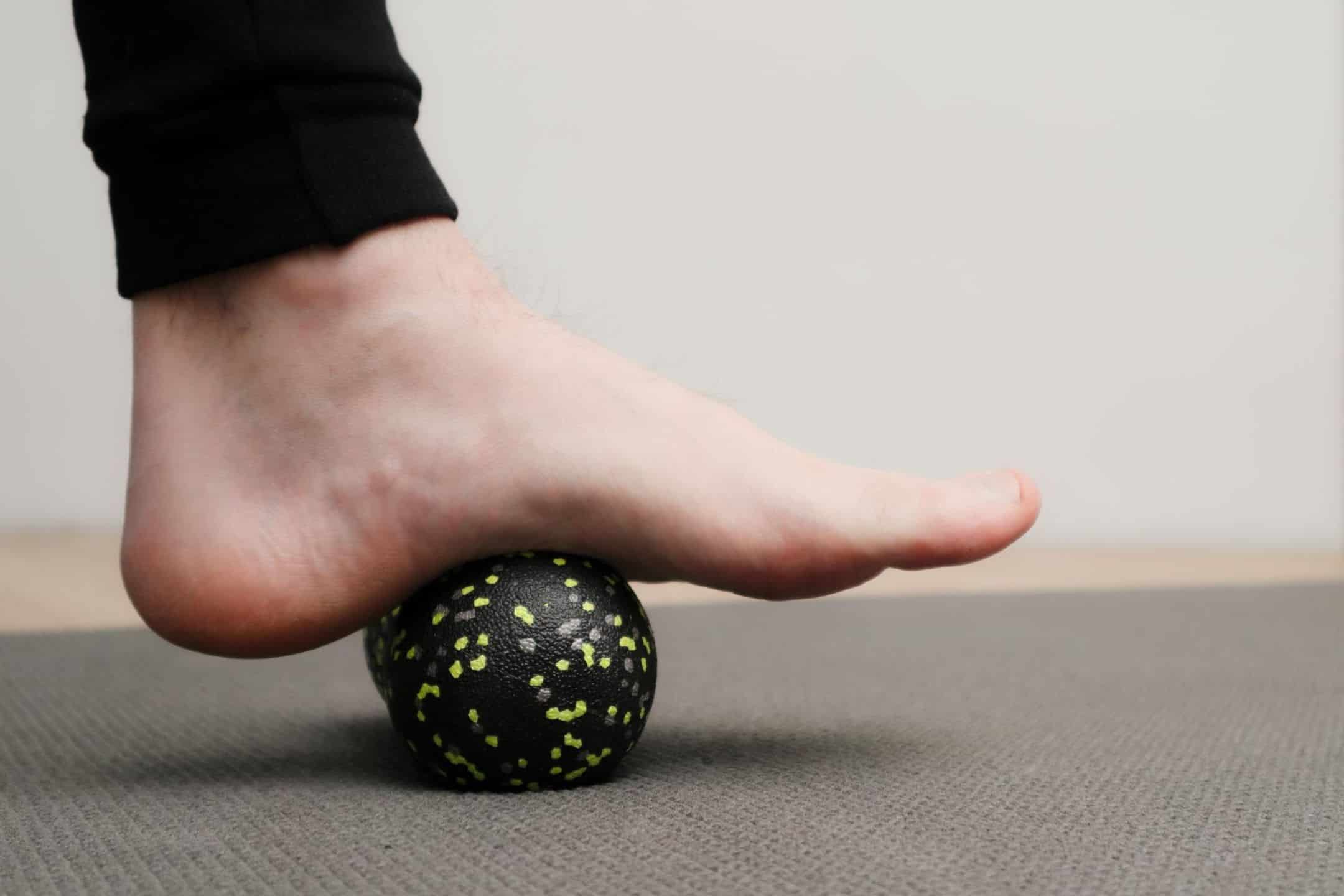
4. Plantar fascia release with a ball or chilled bottle
Rolling the sole of the foot can feel soothing for some people and may help you prepare the foot for stretching or walking. A chilled bottle can provide a cooling effect, but avoid using ice directly on the skin.
- Sit in a chair with your foot resting on a tennis ball, massage ball or chilled water bottle.
- Roll slowly from the heel towards the ball of the foot.
- Use gentle pressure and avoid pressing hard into a very tender area.
- Pause briefly over tight areas only if this remains comfortable.
Try: 1 to 2 minutes, once or twice daily.
This should not be painful. The aim is gentle relief and movement, not to aggressively “break up” tissue.
5. Towel toe curls
The small muscles within the foot help support and control the arch during walking. Towel toe curls are a simple way to begin building some foot strength.
- Sit with your bare foot flat on a small towel placed on the floor.
- Keep your heel down.
- Use your toes to scrunch the towel towards you.
- Relax the toes and repeat until you have gathered most of the towel.
- Smooth the towel out and repeat if comfortable.
Try: 2 rounds of 8 to 12 toe curls, once daily.
Keep the effort light at first. If your toes cramp, reduce the number of repetitions or take a longer rest.
6. Slow heel raises with a towel under the toes
Strengthening the calf and foot can be an important next step once basic stretches are comfortable. This exercise places gradual load through the calf, heel and plantar fascia.
- Place a rolled-up towel under your toes, with the ball of your foot and heel on the floor.
- Hold a worktop or wall lightly for balance.
- Rise slowly onto the balls of both feet.
- Pause briefly at the top.
- Lower your heels slowly and with control.
Try: Start with 2 sets of 8 repetitions every other day.
If this is comfortable over time, you may gradually build towards 3 sets of 10 to 12 repetitions. Some people may progress to a single-leg heel raise, but this is not suitable for everyone. Your symptoms during the exercise and the following morning should guide the pace of progression.
Research has found that progressive heel-raise strengthening can support improvements in pain and function for plantar fasciitis. It should be introduced gradually rather than used as a reason to push through worsening pain.
A simple daily plantar fasciitis routine
A consistent routine does not need to take long. Try this as a starting point for 2 to 3 weeks, then review how your heel is responding.
Morning – before your first steps
- Plantar fascia stretch – 10 repetitions
- Gentle ball or bottle roll – 1 minute
- Straight-knee calf stretch – 3 holds of 20 to 30 seconds
Evening or after activity
- Straight-knee calf stretch – 3 holds
- Bent-knee calf stretch – 3 holds
- Towel toe curls – 2 sets of 8 to 12
- Slow heel raises – 2 sets of 8, every other day
A little discomfort during an exercise may be manageable, but pain should settle rather than continue to build. Consider reducing the repetitions, range or frequency if your heel is noticeably more painful later that day or the following morning.
What exercises should you avoid with plantar fasciitis?
The right exercise depends on the stage of your symptoms, your activity level and how your foot is loading. It is usually sensible to avoid:
- Running through a clear increase in heel pain
- Suddenly increasing walking distance, hill work or high-impact exercise
- Aggressive stretching that causes sharp pain
- High-repetition jumping or plyometric exercises while first-step pain remains significant
- Walking barefoot on hard floors if this aggravates your symptoms
- Treating exercise as a reason to ignore footwear, recovery or activity changes
Swimming, cycling or other lower-impact exercise may be easier to tolerate for some people while heel pain settles. Supportive, cushioned footwear can also be helpful in the short term.
How long do plantar fasciitis exercises take to work?
There is no fixed timeline. Some people notice that morning stiffness or tightness begins to settle within a few weeks, while others need longer, particularly where symptoms have been present for months or daily demands continue to overload the heel.
Exercises are not an instant fix and they do not work in isolation for everyone. Consistency, sensible activity changes and the right level of progression matter. If you are not making meaningful progress after 4 to 6 weeks, or symptoms are returning whenever you become more active, an assessment can help clarify what may be driving the problem.
Can exercises alone cure plantar fasciitis?
Exercises may help, but they are not a guaranteed cure and they are not the only consideration. Persistent heel pain may need a more individual plan that considers:
- Footwear and work or activity demands
- Calf and ankle movement
- Foot posture and lower-limb loading
- Your walking or running pattern
- The possibility of another cause of heel pain
Foot orthoses – insoles designed to support how the foot functions – may be considered where assessment indicates they could be useful. They are usually part of a wider treatment plan rather than a stand-alone answer.
When to get your heel pain assessed
Arrange an assessment if:
- Morning heel pain is persistent or worsening
- Heel pain is affecting your walking, work, exercise or sleep
- You have tried sensible self-care without progress after 4 to 6 weeks
- Symptoms keep returning when you restart activity
- You have tingling, numbness or altered sensation
- You are unsure whether it is plantar fasciitis or another cause of heel pain
Seek urgent medical help if you have severe pain after an injury, cannot walk, notice sudden deformity, have spreading redness, fever, pus, a deep wound or signs of infection.
If you have diabetes and develop foot pain, a wound, skin colour change, swelling, warmth, redness or signs of infection, seek prompt medical advice.
FAQs
- Should you stretch plantar fasciitis every day?
Gentle plantar fascia and calf stretching is often included in daily self-care, particularly before your first steps in the morning. The right frequency depends on how your symptoms respond. Avoid stretching aggressively or repeatedly if it increases pain.
- What are the best exercises for plantar fasciitis?
Plantar fascia stretches, calf stretches and gradual foot and calf strengthening are commonly recommended. The most suitable combination depends on your symptoms, movement and activity demands.
- Can I still walk with plantar fasciitis?
Many people can continue some walking, but it may be helpful to reduce or break up activity if pain is increasing. Avoid suddenly increasing your distance or walking through worsening symptoms.
- Do orthoses help plantar fasciitis?
Orthoses may be useful for some people, particularly where foot loading or footwear is contributing to symptoms. Not everyone needs them, so assessment should guide this decision.
How Stuart can help
A biomechanical assessment with Stuart Hodder looks beyond the sore area itself. He can assess how your foot, ankle and lower limb are moving and loading, alongside your footwear, activity and relevant health factors.
Evolution Podiatry has clinics in London and Surrey. If heel pain is not improving with exercises, book an assessment with Stuart to understand what may be driving your symptoms and discuss practical next steps towards more comfortable movement.
This information is general guidance and does not replace a clinical assessment. If your symptoms are severe, worsening or you are concerned, please seek appropriate medical advice.