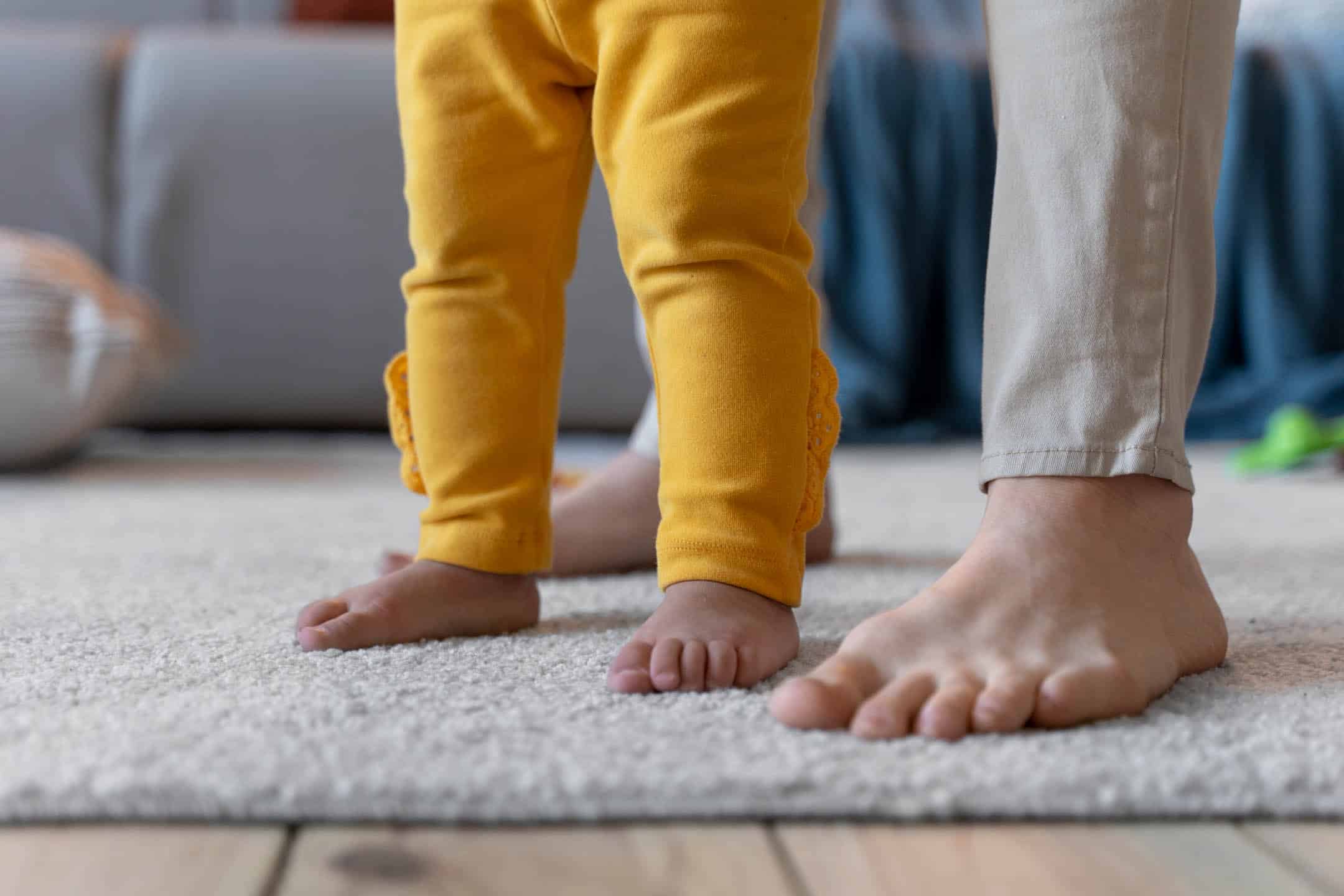

Flat feet in children are usually normal and painless. Many toddlers and younger children have feet that look flat when they stand, but can still walk, run, play and take part in sport comfortably.
It is understandable to notice that your child’s arches look low, their ankles seem to roll inwards or their shoes wear unevenly. These observations can feel worrying, particularly when you are unsure whether your child’s feet are developing as expected.
In most cases, a low arch is simply part of normal childhood development. The more important question is whether your child is in pain, struggling with activity, tripping often or showing a change in how their feet look or move.
Are flat feet in children normal?
Yes. Flat feet are common in children and are often part of the normal development of the feet.
A child’s foot is still growing and changing. Younger children also have a soft pad of tissue around the arch area, which can make their feet appear flatter than they may later look. Some children gradually develop a more visible arch as they grow, while others naturally continue to have lower arches into adulthood.
Neither outcome is automatically a problem.
Children’s foot shape varies, just as height and hand size vary. A visible arch is not the only sign of a healthy, functional foot. If your child is active, comfortable and able to keep up with everyday play, painless flat feet are usually not something that needs treatment.
Research supplied for this article describes most childhood flat feet as a normal part of foot development, with symptoms occurring in a much smaller group of children.
What are flexible flat feet?
Most child flat feet are known as flexible flat feet.
This means the arch appears low or absent when your child is standing, but may become visible again when they sit down, lift their foot off the floor or rise onto their toes. The foot is able to move normally rather than being held in a fixed flat position.
Flexible flat feet are common in children because their joints and ligaments are often naturally more mobile. When body weight goes through the foot, the arch may lower. This does not necessarily mean the foot is weak or damaged.
If your child has flexible flat feet, no pain and no difficulty with normal activity, reassurance and monitoring may be all that is needed.
When are flat feet not usually a concern?
Flat feet are often not a concern when your child:
- Has no foot, ankle or leg pain
- Walks, runs and plays comfortably
- Keeps up with children of a similar age
- Has a similar foot shape on both sides
- Has feet that remain flexible
- Has not developed a limp
- Is not avoiding activity because of discomfort
- Has not had a sudden change in how their feet look
A low arch alone is not a reason to assume that your child needs specialist footwear, exercises or insoles.
It can be helpful to focus on how your child feels and functions, rather than trying to make their feet look a particular way. Children can have low arches and still have comfortable, capable feet.
When should you worry about a child’s flat feet?
It is worth arranging an assessment if flat feet are linked with pain, stiffness, a noticeable difference between the feet or a change in your child’s movement.
Signs that deserve a closer look include:
- Pain in the feet, arches, ankles, legs or knees
- Pain during or after walking, running or sport
- Avoiding play, PE or sport due to discomfort
- Frequent tripping, falling or difficulty keeping up
- One foot appearing noticeably flatter than the other
- A foot or ankle that feels stiff
- A foot that does not seem to form an arch when your child rises onto their toes
- A change in foot shape over time
- Limping, swelling or recurrent ankle injuries
- Symptoms that are getting worse or keep returning
Painful or rigid flat feet are less typical than painless flexible flat feet. A rigid foot is one that does not move easily or does not show an arch when your child rises onto tiptoes. Assessment can help clarify what may be driving the symptoms and whether monitoring, practical advice, treatment or referral is appropriate.
Recurring trips or falls can have different causes and do not necessarily mean there is a serious foot problem. However, they are worth mentioning if they are happening regularly or are affecting your child’s confidence, activity or comfort.
What causes flat feet in children?
Flat feet in children may be linked to normal development, natural foot shape and family tendency. They can also be more noticeable in children with generally flexible joints and ligaments.
Other factors that may influence how a child’s feet feel include:
- How their feet and lower limbs are loading during walking or running
- Changes in activity or sport
- Muscle flexibility
- Footwear that rubs, feels restrictive or does not fit well
- Growth and changing movement patterns
Flat feet may be one part of the picture, but they are not always the whole explanation for pain or walking concerns. A clear assessment considers your child’s symptoms, development, activity and the way their feet and lower limbs move together.
Do children grow out of flat feet?
Many children develop a more noticeable arch as they grow. Others continue to have naturally low arches without pain or limitation.
There is no need for every child to develop a high or clearly defined arch. The priority is comfortable movement and participation in everyday life, not achieving a particular foot shape.
If your child is comfortable and active, there is usually no need to try to change the appearance of their feet. If they have symptoms or their foot shape is changing, an assessment can provide reassurance and clear next steps.
Does my child need orthotics for flat feet?
Not necessarily.
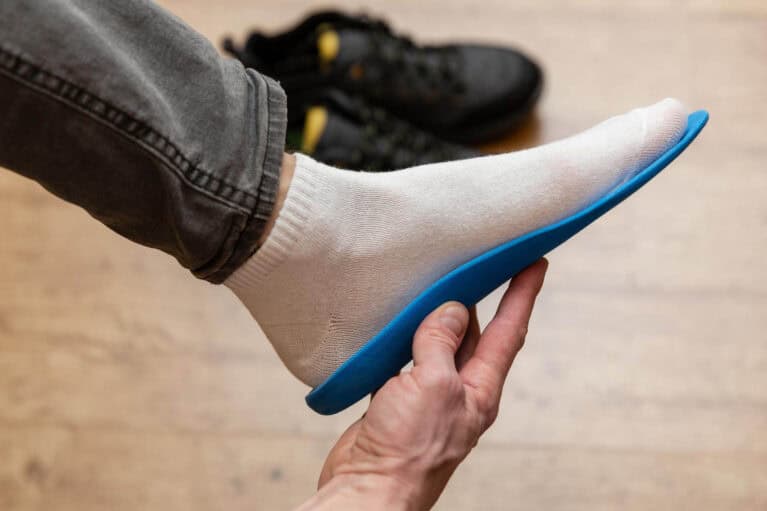
Orthoses are insoles designed to support how the foot functions. They may be considered for some children with symptoms, such as foot fatigue, aching or pain that appears linked to how their feet and lower limbs are loading.
However, not every child with flat feet needs orthoses. Stuart will only discuss them if an assessment suggests they may be useful for your child’s symptoms, foot function or activity.
The purpose of orthoses is not simply to create an arch. They may support comfort or activity in some situations, but they are not a routine answer for painless flexible flat feet and may not be suitable or necessary for every child.
Evidence on non-surgical approaches for children with symptomatic flat feet remains limited, which reinforces the importance of individual assessment rather than automatic treatment.
How a children’s podiatry assessment can help
A children’s podiatry assessment provides time to talk through your concerns and understand whether your child’s feet are developing within a typical range.
Stuart Hodder is a Specialist Podiatrist and clinical lead at Evolution Podiatry. He has extensive experience in foot, ankle and lower-limb pain, with a particular interest in biomechanics, gait analysis, sports injuries and child development. fileciteturn0file16turn0file17
During an assessment, Stuart may:
- Discuss your concerns and your child’s symptoms
- Ask about development, activity, sport and footwear
- Assess foot posture, joint movement and muscle flexibility
- Look at how your child stands, walks and moves
- Consider how the feet and lower limbs are loading
- Explain the findings in plain English
- Advise whether reassurance, monitoring, practical changes, treatment or referral may be appropriate
A biomechanical assessment looks in more detail at how the feet, legs and body move together. This can be helpful where pain, asymmetry, repeated trips or a walking concern needs further review.
You can also read our broader guidance on flat feet and arch pain. That page covers flat feet more generally, while this article is focused on the questions parents commonly have about child flat feet.
Practical steps while you seek advice
If your child is comfortable, active and not limited by their feet, simple observation is often appropriate.
If they have mild symptoms or you are arranging an assessment, you may find it helpful to:
- Choose comfortable, well-fitting shoes with space for growing feet
- Avoid footwear that pinches, rubs or feels heavy
- Encourage normal activity within your child’s comfort
- Make a note of when symptoms happen and what seems to bring them on
- Bring their everyday shoes and sports shoes to the appointment where relevant
Avoid choosing specialist insoles solely because your child has low arches. An assessment can help clarify whether they are likely to be useful.
Seek urgent medical help if your child has severe pain after an injury, cannot walk, notices sudden deformity, has spreading redness, fever, pus, a deep wound or signs of infection.
Frequently asked questions
- Are flat feet in toddlers normal?
Yes. Flat feet in toddlers are very common and usually part of normal foot development. Some children develop more visible arches as they grow, while others retain naturally lower arches.
- When should a child see a podiatrist for flat feet?
Consider booking an assessment if your child has pain, stiffness, frequent trips or falls, a limp, one foot that looks different from the other or flat feet that affect everyday activity.
- Can flat feet cause leg pain in children?
Foot posture may contribute to foot, ankle or leg symptoms in some children, but it is not always the full explanation. Assessment can help clarify what may be driving the discomfort.
- Will my child need treatment?
Not always. Many children need reassurance and monitoring only. Treatment recommendations depend on your child’s symptoms, health, activity level and assessment findings.
- Can children be seen at Evolution Podiatry?
Children can be assessed at suitable clinic locations. Please note that under-18 appointments are not available at the Woking clinic.
Worried about your child’s flat feet?
If your child has pain, a walking concern or flat feet that seem to be affecting everyday activity, arrange a children’s podiatry appointment with Stuart Hodder.
A clear, reassuring assessment can help you understand what may be driving the concern and guide the most suitable next step.
This information is general guidance and does not replace a clinical assessment. If your child’s symptoms are severe, worsening or you are concerned, please seek appropriate medical advice.